侠客行
技术向上 文明向善 “AI语境下的网络文明与社会伦理”座谈会走进临平算力小镇_我的网站

A |
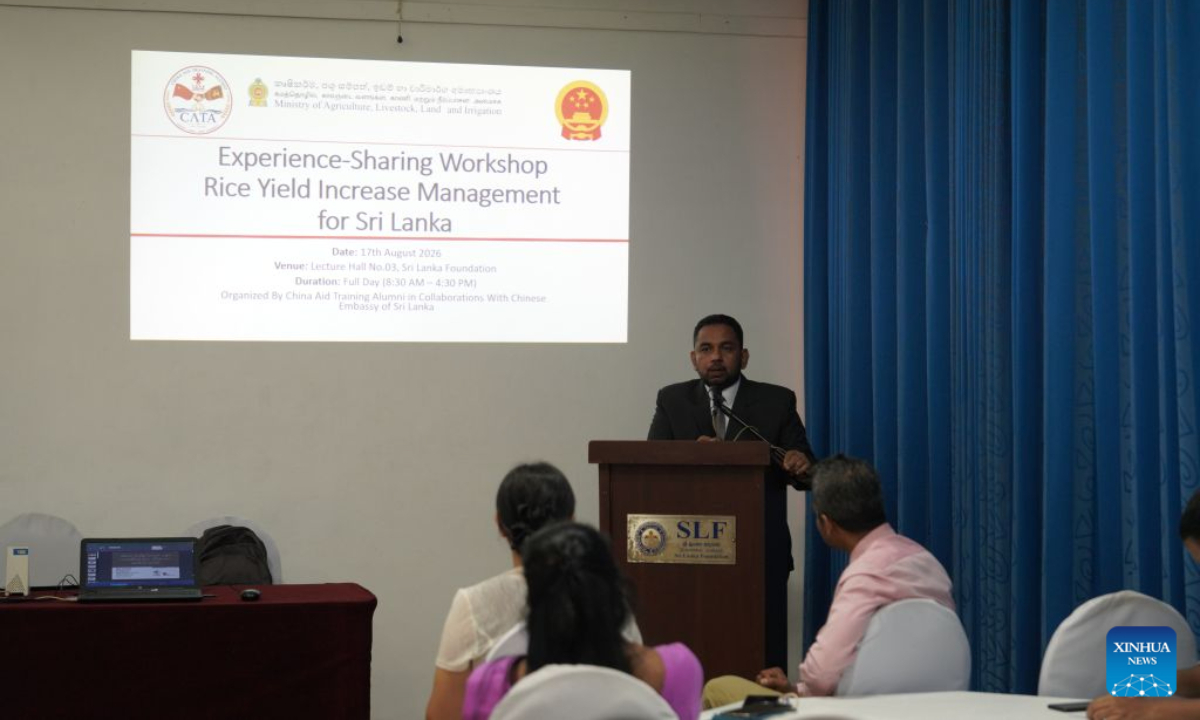
Sanjeewa Wimalagunarathna, president of CATA Sri Lanka, speaks during the first targeted experience-sharing workshop organized by China Aid Training Alumni (CATA) Sri Lanka held in Colombo, Sri Lanka, Aug. 17, 2026. The first targeted experience-sharing workshop organized by China Aid Training Alumni (CATA) Sri Lanka was held in Colombo on Monday, focusing on ways to increase rice yields and promote agricultural development in the country. (Xinhua/Chen Dongshu)The first targeted experience-sharing workshop organized by China Aid Training Alumni (CATA) Sri Lanka was held in Colombo on Monday, focusing on ways to increase rice yields and promote agricultural development in the country.
Organized by CATA Sri Lanka with support from the Chinese Embassy in Sri Lanka and Sri Lanka's Department of Agriculture, the workshop, themed "Rice Yield Increase Management for Sri Lanka," focused on high-yield rice varieties, seed technology, sustainable soil and water management, integrated pest and disease management, agricultural mechanization, post-harvest technologies, as well as policy and institutional support.
Sanjeewa Wimalagunarathna, president of CATA Sri Lanka, said in his welcome remarks that the event was the first experience-sharing workshop of its kind launched by the organization this year, describing the participating alumni as "pioneers" of the initiative.
He said the workshop would serve as a pilot for similar programs in the future and encouraged the alumni to provide frank and practical input based on both what they had learned during training in China and Sri Lanka's actual conditions, so that their experience and suggestions could be genuinely useful.
The representative of the Chinese Embassy in Sri Lanka said agriculture has long been an important area of practical cooperation between China and Sri Lanka.
She expressed hope that the alumni would make good use of the knowledge and experience they had gained in China and become a backbone force in Sri Lanka's agricultural development, while continuing to serve as ambassadors of friendship between the two countries, integrating their personal growth with national development and contributing to deeper bilateral cooperation.
During the workshop, Sri Lankan alumni shared techniques and practices they had learned in China in areas including high-yield varieties, water management, integrated pest management, mechanization and post-harvest technologies.
Participants were also divided into working groups to discuss seed technology and varietal improvement, sustainable soil and water management, integrated pest and disease management, mechanization and modern farming practices, post-harvest storage and marketing, as well as policy and institutional support.
Each group was tasked with developing a practical implementation roadmap containing specific recommendations, timelines, responsible institutions and required support. The roadmaps were then presented to relevant stakeholders for discussion and feedback, with a follow-up mechanism also envisaged by the organizers.
Rice is a staple food in Sri Lanka and plays an important role in the country's food security. Sri Lanka's annual paddy production reached about 5.05 million metric tons in 2025, up 7.6 percent from the previous year, according to the Central Bank of Sri Lanka.
China and Sri Lanka have continued to expand cooperation in human resources development and capacity building in recent years. China has organized aid-funded training programs for Sri Lankan participants from government departments, research institutions, business associations and enterprises.
According to the Chinese Embassy in Sri Lanka, nearly 14,000 Sri Lankan political and business representatives have participated in China-aid training programs in China over the years. In 2025 alone, approximately 1,000 Sri Lankan trainees participated in nearly 100 training programs, including 19 bilateral programs tailored to Sri Lanka's specific needs.
。 为深入学习贯彻习近平总书记关于网络强国的重要思想,贯彻落实习近平总书记在2026世界人工智能大会暨人工智能全球治理高级别会议开幕式上的重要讲话精神,加强人工智能治理的理论研究与实践探索,日前,“AI语境下的网络文明与社会伦理”座谈会在杭州市临平区算力小镇举行。本次活动由杭州市社科联(院)主办,临平区社会科学界联合会、临平新城开发建设管委会承办。30余位来自省市社科理论界、高校科研院所的专家学者和相关企业代表齐聚一堂,聚焦AI语境下网络文明与社会伦理这一重大命题开展深入研讨。

B | 座谈会前,与会人员实地参观了算力小镇算力创新馆和杭州长鹰影视科技有限公司,近距离了解算力产业的发展现状,以及AI技术在影视文创领域的创新应用,对临平区在人工智能产业方面的探索实践有了更加直观的感受。在主题发言环节,7位专家学者围绕人工智能时代的网络文明建设、社会伦理风险防范、AI赋能文化传承、算法治理、数字人文等议题,结合理论前沿与地方实际,深入剖析AI发展带来的机遇与潜在风险,并就构建清朗有序的AI发展环境、发挥社科力量助力人工智能治理提出建设性意见。

C | 与会专家一致认为,推动人工智能行稳致远,必须在鼓励技术创新的同时守牢伦理底线,以扎实的理论研究支撑治理实践,为城市AI产业高质量发展筑牢文明根基。

D | 接下来,社科理论界将在积极营造文明和谐、清朗有序的人工智能发展环境等方面展开研究探讨,为赋能杭州争创人工智能创新发展第一城,助力高质量发展建设共同富裕示范区城市范例展现智慧担当。

E |
Current article:http://p2lu5t.jiubengtaibingpengou.pics/c1gy/20260826/5547.html
Published on:05:50:32


 半导体需求回暖,德州仪器有望迎来创纪录季度业绩
 Windows是AI PC路上的绊脚石
 BPSC Bharti 2025: बिहार AEDO के बंपर पदों पर आवेदन स्टार्ट, फीस, पात्रता सहित पूरी डिटेल यहां करें चेक
 DOP Vikash Nowlakha Reveals How Aditya Dhar and He Built The Look of Dhurandhar
 科贝:维尼修斯应该少说话少做手势,否则会遭遇变本加厉的针对
 【收评】沥青日内下跌2.63%机构称沥青国际原油价格大跌,成本端支撑减弱